
Homeowner’s Guide to Air Conditioning
Everything you need to know to keep your home cool, efficient, and worry-free.
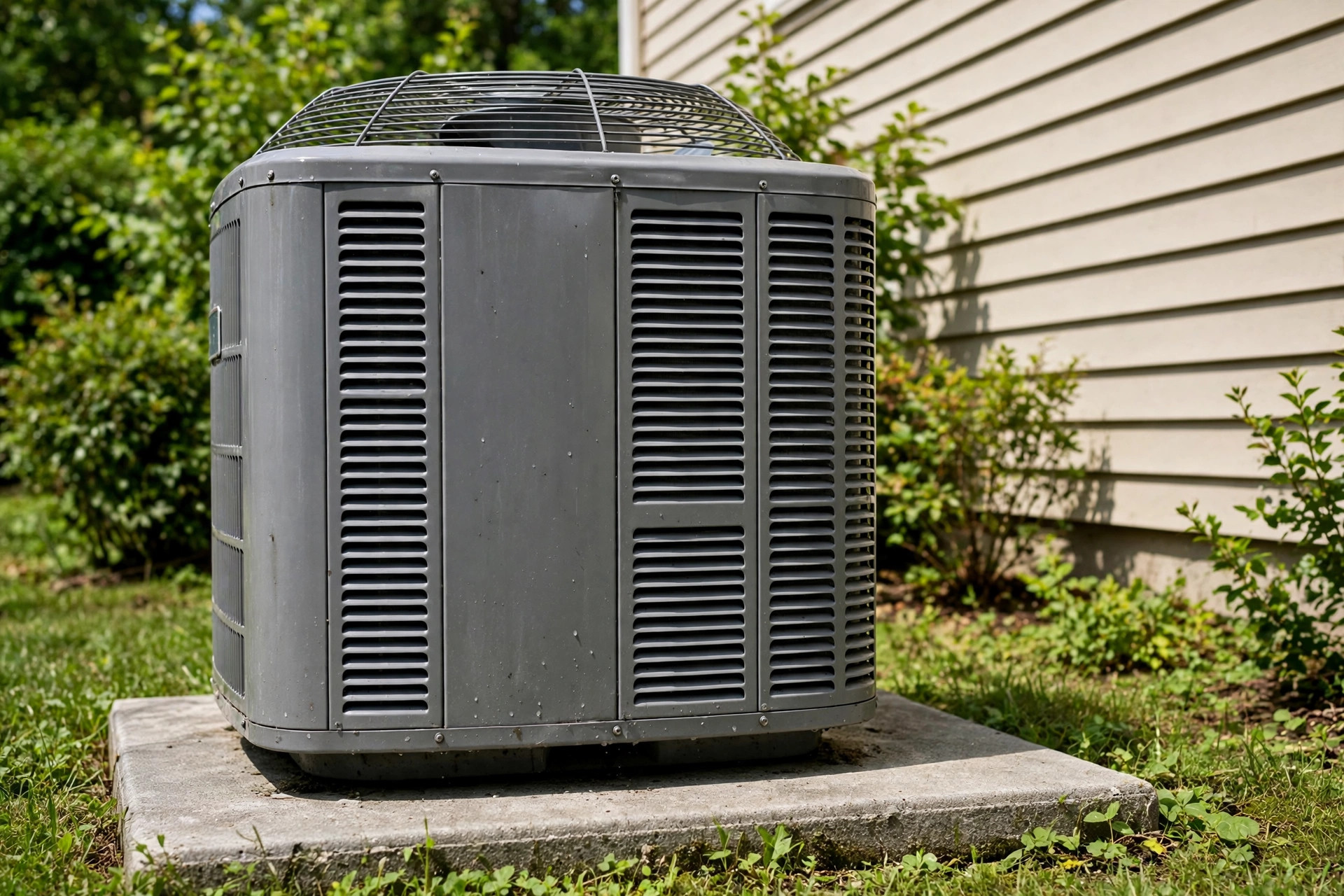
Introduction
Your AC works hard during a North Texas summer. Knowing a few basic things about it can help you stay comfortable and avoid guessing when something changes. You do not need to know every part inside the system. You do need to know how cooling works, which warning signs matter. When a pro should take over.
This guide explains the connected parts of central AC. For a specific symptom, follow the related question links to our shorter answers.
How Your AC Works
An AC does not create cold air from nothing. Ittakes heat out of indoor air and releases that heat outdoors. Many systems also remove some moisture from the air as they cool.
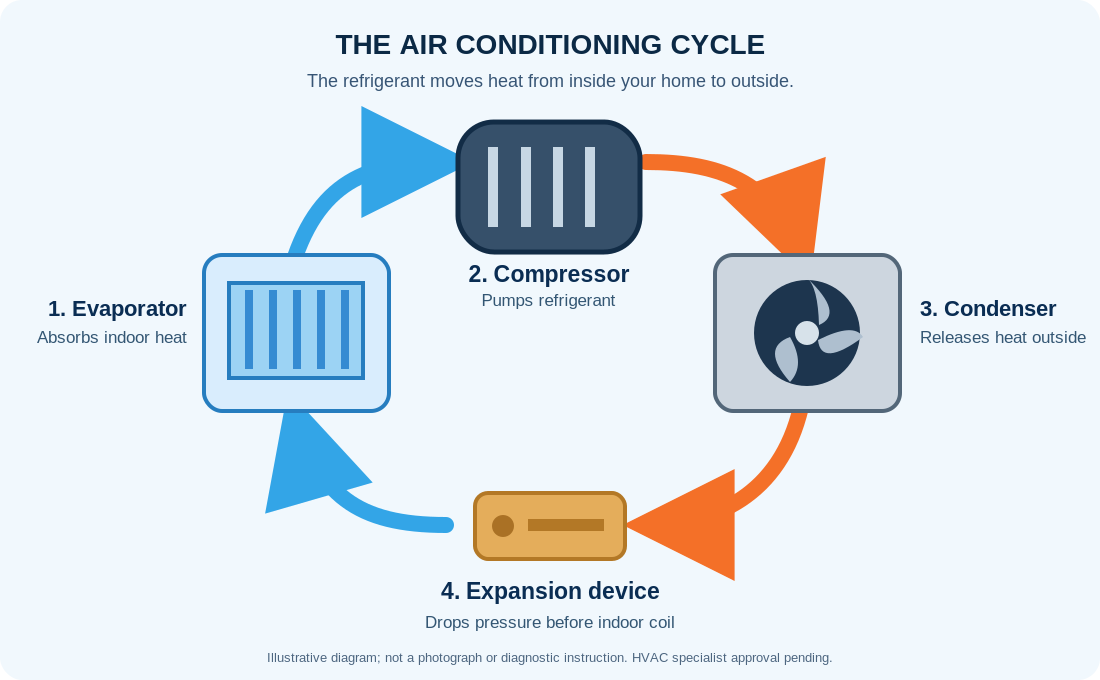
A common central system has an indoor section and an outdoor section. Inside, a blower moves room air through a filter and across the indoor coil. Refrigerant inside that coil absorbs heat. The warmed refrigerant moves through a sealed loop to the outdoor unit, where that heat is released. The cycle repeats until the room reaches the thermostat setting.
The four main steps of the refrigerant cycle
- Evaporator:The indoor coil absorbs heat from the air flowing past it.
- Compressor:This outdoor part pumps refrigerant and raises its pressure and temperature.
- Condenser:The outdoor coil releases heat to outside air.
- Expansion device:Refrigerant pressure drops before it returns to the indoor evaporator.
Why airflow is half the story
The refrigerant loop can work properly and the house may still feel warm if too little air moves across the indoor coil. A dirty filter, covered return grille, or blower problem can restrict airflow. Restricted airflow can even contribute to ice forming on the indoor coil. This is why technicians look atboth airflow and heat transferduring a cooling complaint.
More detail:How does central air conditioning work?(Q72).
Common Problems
The system runs, but the house does not cool
Start with the thermostat mode and current room temperature. Look at the filter and accessible vents. If the system still runs without cooling, the issue could involve the indoor coil, the outdoor unit, controls, or refrigerant. The symptom alone does not find the failed part. SeeWhy is my AC running but not cooling?(Q11).
Ice forms on the air conditioner
Ice is not proof that the unit is “working extra hard.” Low airflow and refrigerant-related problems are possible causes. Turn off cooling according to the system guidance, avoid disturbing the ice or opening panels. Arrange service if the issue is unresolved. SeeWhy is ice forming on my air conditioner?(Q19).
The breaker trips
An electric fault can trip the protective breaker. Never keep resetting a repeatedly tripping breaker or open the system cabinet to investigate. If you smell burning, see smoke, or notice damaged wiring, stop and seek appropriate emergency help. SeeWhy does my AC keep tripping the breaker?(Q29).
Water appears near the indoor unit
Cooling often creates condensation: water that forms as moisture in the air contacts a cold indoor coil. The water should drain safely away. A blocked drain or failed safety control can cause a leak or shutoff. Never ignore water close to electric parts; seek service if you cannot clearly and safely find the cause. See Q18 and Q28 in the 100-question library.
Maintenance Tips

Replace your air filter often.

Keep the outdoor unit clear of debris.

Schedule annual tune-ups.

Keep vents clear inside your home.
You can help protect cooling performance with a few simple habits:
- Check your filter monthly.Replace it when dirty, following its maker instructions and the system requirements.
- Keep supply and return vents unobstructed.Do not bury return grilles behind furniture or rugs.
- Keep the outdoor unit's surrounding area clear.Remove nearby leaves or loose clutter without opening the cabinet, bending coils, or touching electric parts.
- Schedule pro checks before the cooling season.ENERGY STAR recommends a pro pre-season cooling inspection and a separate heating check before cold weather.
- Notice changes early.Ice, weak airflow, unusual noises, persistent odors. Water leaks can be useful warning signs.
A service visit may include inspections, cleaning, and measurements appropriate to the system.Do not interpret this general list as the exact Texas Heat & Air membership-plan scope.Tim and the HVAC lead still need to approve the purchased service checklist. No membership contract terms are approved for publication through this supplement.
Energy Savings
Your summer electric bill depends on weather, insulation, system efficiency, thermostat habits. How much heat gets into the house. Start with the basics: keep filters clean, manage sunlight where appropriate, seal obvious conditioned-air leaks as recommended by qualified specialists. Use a comfortable thermostat setting.
For summer thermostat settings,78°F is a commonly cited energy-saving reference point, not a universally correct temperature. Comfort, health, pets, and humidity vary. ReadWhat temperature should I set my thermostat to in summer?(supplemental homeowner article).
When shopping for new system, efficiency ratings such as SEER2 help compare models within the applicable class, but correct sizing and quality installation also matter. Claims about a precise bill reduction need evidence specific to the home and system.
When to Repair or Replace
A single expensive-sounding symptom does not always mean the system must be replaced. A good decision considers the technician's confirmed diagnosis, age, repair cost, warranty coverage, history of problems, comfort. The price of a correctly sized replacement.
Ask for a written diagnosis and an itemized estimate. For major decisions, compare repair with replacement as separate options. Avoid simple “age times repair cost” formulas treated as industry rules. SeeShould I repair or replace my air conditioner?(Q41).
Frequently Asked Questions
Does turning the thermostat very low cool the house faster?A typical single-stage system generally runs at its designed rate; a lower target tells it to run longer, not faster.
Does low refrigerant always mean a leak?No. A leak or improper charging can leave a system undercharged. A certified technician needs to confirm the cause. See Q27 and the refrigerant guide.
Should I change the filter every month?Check it monthly; replace when dirty and according to the filter maker's and system's instructions. Many common filters need replacement at least every few months.
Can I repair my own capacitor or add refrigerant?No. Electric parts can store a dangerous charge. Refrigerant handling is regulated work for certified technicians.
Why does my AC feel clammy?Humidity, system sizing, airflow, cycling. Thermostat/fan settings can all influence how a home feels. Testing is needed to diagnose a persistent problem.
Key Takeaways
Your AC keeps you comfortable by moving heat outdoors. Filters, airflow, thermostat choices, and routine attention all matter. Use the safe checks described in the individual articles, but rely on a qualified technician for electric faults, refrigerant problems, major leaks, repeated breaker trips. Anything that puts people at risk. Good details should make decisions clearer—not replace a real diagnosis.

Ask Texas Heat & Air what maintenance plan options are current. Get the full terms in writing before you enroll.
Helpful Questions to Explore Next
 Why is ice forming on my air conditioner?Why does my AC keep tripping the breaker?Should I repair or replace my air conditioner?How often should I service my HVAC system?How often should I change my air filter?How does central air conditioning work?

Still Have Questions? Ask an HVAC Expert.
Couldn't find the answer you need? Tell us what's happening. Our team will review your question and contact you to help.
Ask Your Question →Draft sources (to be re-verified before publication):U.S. Department of Energy — Energy Saver 101 Home Cooling; ENERGY STAR — Heat & Cool Efficiently and Maintenance Checklist; U.S. Department of Energy — Heat Pump Systems.