
Why is water leaking around my indoor AC unit?
Condensate should leave by the drain line. A clog, a rusted pan. A thawing frozen coil spills it into your home. What to do first, and what each pattern points to.

Your AC pulls moisture from indoor air as it cools. That water should collect in a drain pan and leave through a drain line. A clogged drain, a damaged pan. A melting frozen coil can spill it into your home instead. Turn cooling off, protect the area, and call promptly.
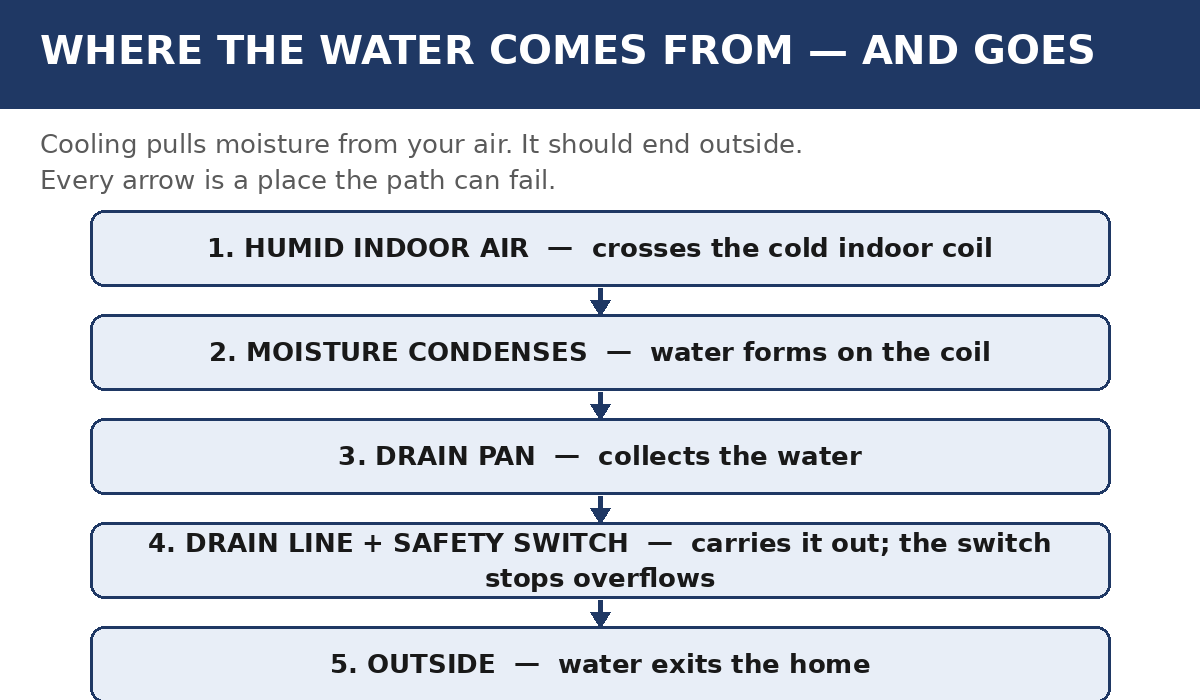
Visual explanation
The condensate path diagram traces the water's route. Coil to drain pan to drain line to outside. With the float safety switch marked and the common leak points shown, so you can match your leak's pattern to its likely break point.
What you can safely check
- Turn cooling OFF if water is actively leaking — a running system keeps making water.
- Move belongings away from the water; keep away from wet electric system. Photograph the damage for your records.
- Dry the area around the unit if you can do so safely. Do not open the cabinet.
- Never bypass a drain safety switch to keep the system running. It shuts the system down to protect your home.
What might be causing this
AC is also dehumidifying. Warm indoor air crosses the cold coil. Its moisture drops out as water. This water is called condensate. The water that forms when warm, humid indoor air is cooled and dried by the system. In humid Texas weather, a system can make a surprising amount of it every day. All of it is supposed to follow one path: coil, drain pan, drain line, outside. The drain line is the condensate drain. The pipe or tube that carries condensate water away from the indoor unit to a drain or outside the home. A leak means the path is broken somewhere.
The most common break is the drain line itself. Dust, slime, and debris build up inside the line until water backs up and overflows the pan. Many systems carry a float switch. A safety device that shuts the AC off when water backs up. If your system stopped cooling just before you found water, that switch may have been doing its job (Q13, Q28).
The second cause is ice. If the coil froze (Q19), the system may have stopped cooling. Then the thaw can release more water at once than the pan and drain can handle. Water on the floor, plus a memory of weak cooling or visible ice earlier, points this way.
The third cause is age: a drain pan on an older unit can rust through, so water escapes even with a clear line.
Urgency is real here, for two reasons. Water in ceilings, walls, and flooring causes damage quickly. And water near electric system is a safety hazard, not just a mess. This is not a "watch it for a week" problem. Turn the cooling off. Move belongings out of the water. Keep clear of wet electric system. Dry what you safely can, without opening the cabinet.
If the system has a float switch and the drain is the cause, the lasting fix is clearing the line and confirming the switch works. Mopping alone guarantees a repeat. Ask the technician which cause it was. The answer tells you whether a maintenance habit can prevent it from happening again.
| Pattern | Likely cause |
|---|---|
| Water + system shut itself off | Drain backup tripped the float switch (Q28) |
| Water after a period of weak cooling or visible ice | Frozen coil thawing (Q19) |
| Slow, steady drip on an older system, drain clear | Rusting drain pan |
| Leak returns soon after being "fixed" | The drain cause was never fully cleared |
When to call a professional
Call promptly — the same day if water is near electric system or spreading into ceilings or walls. A technician clears the drain line, tests the safety switch. Repairs or replaces a failed pan, rather than just drying the spill.
What happens next
Cooling stays off and the area stays protected until the visit. Ask Texas Heat & Air to confirm the diagnostic fee when you book. You receive a written diagnostic report and a written repair estimate. No repair begins until you approve it.
Texas Heat & Air next step
Water where it should not be? Cooling off, area protected, then call (682) 438-8127 — promptly, not next week.
Related Questions
 Why is ice forming on my air conditioner?Why won't my AC turn on?

Still Have Questions? Ask an HVAC Expert.
Couldn't find the answer you need? Tell us what's happening. Our team will review your question and contact you to help.
Ask Your Question →Sources
- https://www.energystar.gov/saveathome/heating-cooling/maintenance-checklist — condensate drain function and inspection; a plugged drain can cause water damage
- https://www.epa.gov/indoor-air-quality-iaq/should-you-have-air-ducts-your-home-cleaned — moisture and contamination guidance