
What should I do if the AC breaks during extreme heat?
Treat a heat-wave AC failure as a health problem first: hydrate, find a cooled building, know the heat-stroke signs that mean 911, then check the system.

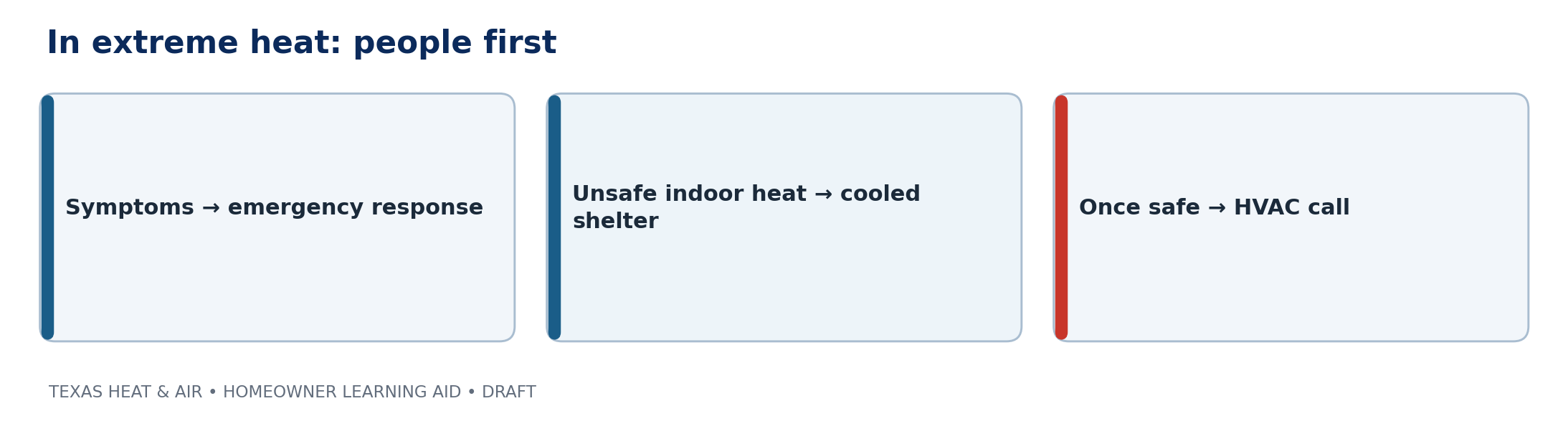
Treat this as a health problem first and an system problem second. Drink water, rest, and watch for heat illness. Confusion, collapse, or very hot skin means call 911. If your home keeps getting hotter, move to a cooled building. Do not rely on a fan alone in very hot indoor air. Then make the quick system checks and call for service.
What you can safely check
People first.Drink water often — do not wait for thirst — and cut back on activity. Know the two levels of trouble the CDC describes:
- Heat exhaustion:heavy sweating, weakness, nausea, headache, dizziness. Respond with rest, cooling, and fluids, and watch for worsening.
- Heat stroke:a very high body temperature, hot skin that may be dry, confusion, slurred speech, or collapse. This is a911 emergency. Call right away, move the person to a cooler place. Cool them with wet cloths or a cool bath. Do not give a heat-stroke victim anything to drink.
Find a cooled place.If your home's indoor temperature keeps rising, go somewhere cooled. A relative's home, a library, a mall, or a public cooling center. Dialing 2-1-1 in Texas can help locate one during heat events. This comes before troubleshooting, not after. While you arrange it, close blinds on sunny windows, avoid the oven, and use the lowest, shadiest rooms. Check on neighbors, especially older ones living alone. The knock on the door is a safety device. Never leave children or pets in a vehicle, for any length of time.
The fan caution.A fan in a merely warm room is fine. But do not make a fan your only defense when indoor air gets very hot. The CDC warns that fans may not prevent heat-related illness in extreme indoor heat. Blowing very hot air across the body can heat you rather than cool you. A cooled building is the reliable answer.
System last, and only if it is quick and safe:thermostat set to COOL, filter not clogged, breaker not tripped (reset once only). If cooling does not return, stop there — no opening panels, no electric work.
What might be causing this
Heat waves are when systems fail, because they run their longest hours under their heaviest load. A technician who comes out after a heat-wave breakdown often finds one of these: a failed capacitor (the part that helps motors start and run), a dirty outdoor coil or clogged filter choking airflow, a refrigerant problem, or a motor giving out. These are possibilities, not a diagnosis. The same symptom — warm air or no air — can come from several of them. That is why a technician tests rather than guesses.
When to call a professional
Call 911 first for any heat-stroke sign. That call outranks every other instruction on this page. For service, call (682) 438-8127 as early as you can. In a heat wave, every company's queue grows by the hour. Call Texas Heat & Air at (682) 438-8127 to ask about the soonest opening and what after-hours help is available. Arrival times are not guaranteed. Say clearly if anyone in the home is heat-vulnerable. An older adult, an infant, someone with a chronic condition. Because that details drives honest triage.
What happens next
Ask Texas Heat & Air to confirm the diagnostic fee when you book. You receive a written diagnostic report and a written repair estimate. No repair begins until you approve it. If the wait will be long and your home is becoming dangerous, take the cooling-center decision seriously rather than waiting it out. A repair visit is never worth a heat emergency.
Texas Heat & Air next step
People safe and checks done? Call (682) 438-8127 — and if anyone shows heat-stroke signs, 911 first, us second, always.
Related Questions
 Why won't my AC turn on?What if my carbon monoxide alarm sounds?

Still Have Questions? Ask an HVAC Expert.
Couldn't find the answer you need? Tell us what's happening. Our team will review your question and contact you to help.
Ask Your Question →Sources
- https://www.cdc.gov/extreme-heat/prevention/ — CDC guidance on preventing heat-related illness: signs of heat exhaustion and heat stroke, cooling strategy. The fan caution.
- https://www.ready.gov/heat — Ready.gov on heat preparedness and cooling centers.