
What does the diagnostic fee include?
Ask Texas Heat & Air to confirm the diagnostic fee when you book.

Costs vary by home, system, and repair. Ask Texas Heat & Air for a written estimate before work begins. It always includes the conclusion: a plain-language explanation, a written diagnostic report, and a written repair estimate.
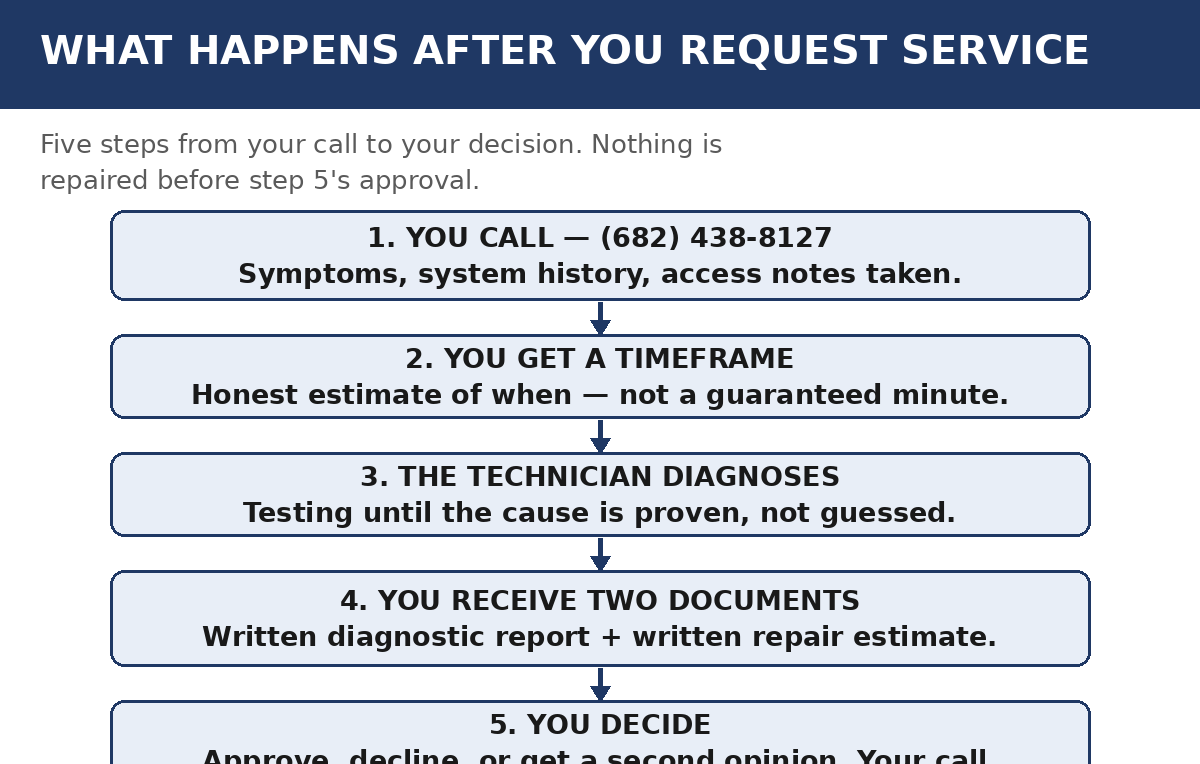
Visual explanation
This article shares the service-visit flow diagram used in Q7 and Q10 rather than duplicating it.
Caption: The diagnostic visit flow: describe the symptom, the technician tests what it points to. You receive the finding and the price in writing. It teaches that a diagnosis is a process with a fixed end point — written documents you keep.
What to have ready
- A precise account of what the system has been doing: when it started, what changed, and any sounds or smells. Good history makes the diagnosis faster and the scope smaller.
- Your questions about scope. If any specialized testing beyond the standard visit is proposed, ask what it is and what it costs. Before it is done, not after.
What the visit includes
A diagnostic is a process, not a single test, because different symptoms need different checks. Warm air points toward the cooling cycle. A system that will not start points toward power and controls. A water leak points toward the drain.
The technician follows your symptom through the system. He tests the parts that could cause it, until the cause is proven — not guessed. Q10 walks through the visit itself. Q11 Shows why one symptom can hide several causes.
Depending on the symptom, the evaluation may involve:
- Thermostat use and its signals to the system.
- Electric controls and connections, including the starting parts.
- Motor operation.
- Airflow at the vents and through the filter.
- The condensate drain — the pipe that carries away the water that forms as warm indoor air is cooled and dried — and its safety switch.
- Measured cooling or heating performance.
Not every test fits every system. A careful technician tests what the symptom points to and can explain why each test belongs to your problem.
What the fee always includes is what you receive at the end. A plain-language explanation of what failed. A written diagnostic report documenting the finding. And a written repair estimate with the price of fixing it. Which you approve before any work begins (Q58). The report and estimate are yours to keep whether you proceed, postpone. Take them to another company (Q50).
The boundary of the standard visit deserves the same clarity as its contents. If your problem needs specialized testing beyond the standard scope, the technician should tell you first. What it is, why your system needs it. What it costs. Surprise testing on the invoice is not part of the deal.
When you need a technician
If a symptom is unexplained. Air that will not cool, a system that will not start, water where it should not be. The cause is a guess until someone tests it. The diagnostic visit is how a guess becomes a proven finding, with the finding in writing.
What happens next
You receive the written report and the written estimate. Then the choice is yours: approve the repair, postpone it. Use the documents for a second opinion (Q50). Nothing proceeds without your approval.
Texas Heat & Air next step
Booking a diagnostic? Call (682) 438-8127 and describe the symptom in detail. The scope of the visit starts with your description.
Related Questions
 What should I expect during the first diagnostic visit?Will I get a written estimate before repairs begin?

Still Have Questions? Ask an HVAC Expert.
Couldn't find the answer you need? Tell us what's happening. Our team will review your question and contact you to help.
Ask Your Question →Sources
- https://www.energystar.gov/saveathome/heating-cooling/maintenance-checklist — ENERGY STAR, Heating & Cooling Maintenance Checklist. Supports what a pro evaluation of heating and cooling system generally examines (accessed October 13, 2026).
- Source note: the company-specific details in this article are awaiting confirmation from Texas Heat & Air.